Research
Current research projects and long-term research interests.
Aberrant cancer-stroma interactions in lung cancer
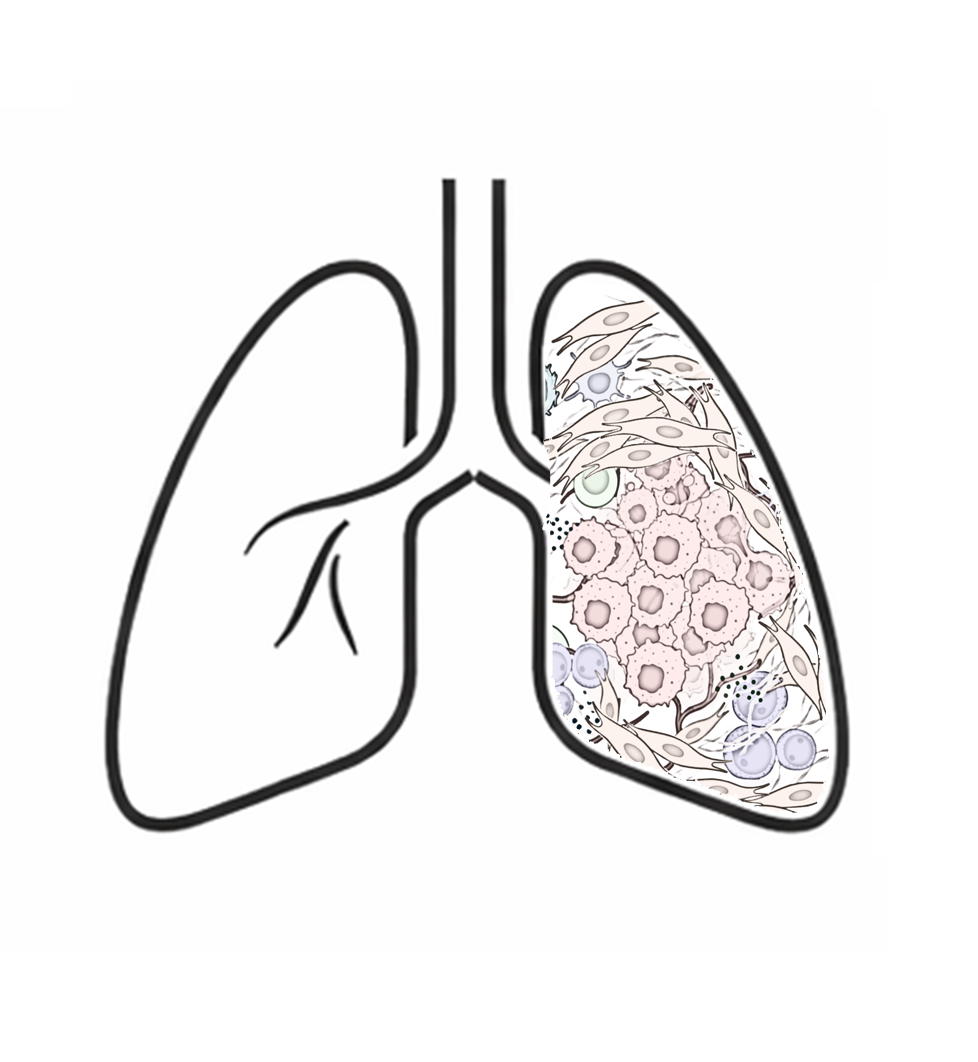
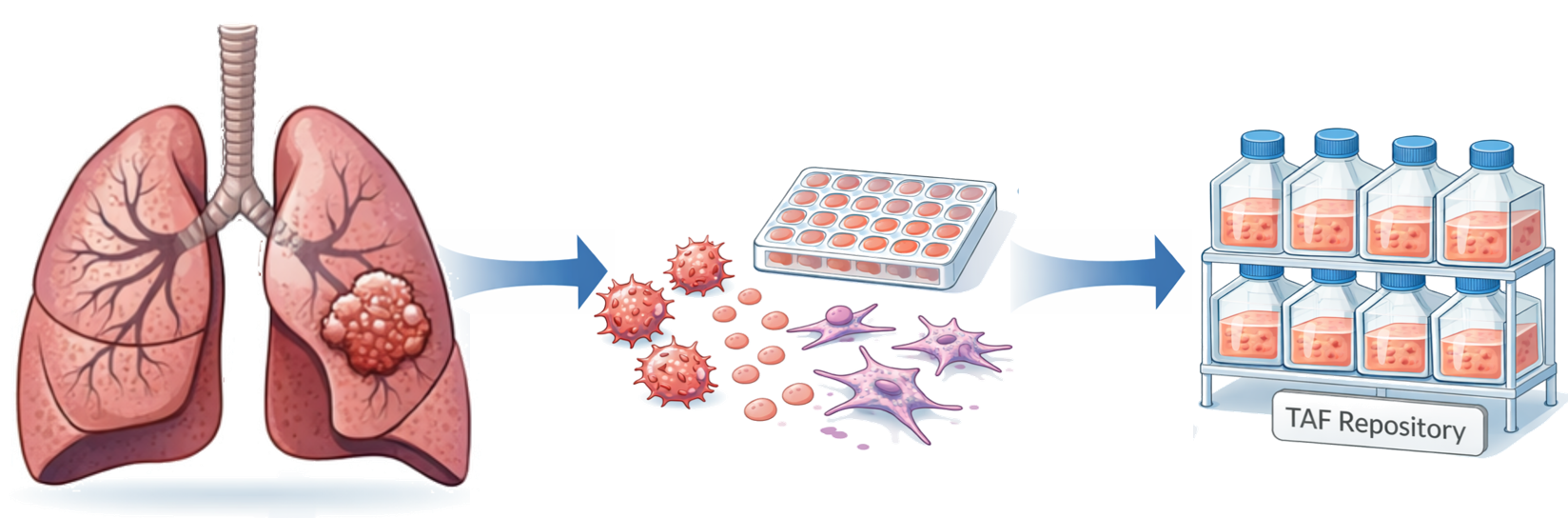
Lung cancer remains the leading cause of cancer-related deaths worldwide, with a 5-year survival rate of only 23% that is much lower than other leading cancer types like breast (91%) or colon (63%). Lung tumors and other solid neoplasias are increasingly regarded as organs driven by the aberrant co-evolution of cancer and stromal cells. Based on the striking similarities between the stroma in tumors and wounds, tumors are often described as “wounds that never heal”, and the desmoplastic (wound-like) stroma is pointed as a major contributor to virtually all steps of tumor progression, including metastasis formation, and even resistance to therapies. However, the mechanisms underlying the effects of such tumor stroma on tumor/metastasis-promotion and modulation of therapy responses, including immune checkpoint inhibitors, remain poorly understood, particularly in lung cancer. To address this limitation, we started in 2010 a collection of tumor associated fibroblasts (TAFs) -the most abundant stromal cell type- from surgical patients of the Hospital Clínic de Barcelona diagnosed with non-small cell lung cancer (NSCLC), which is the most abundant lung cancer type. Likewise, we gathered biopsies from a cohort of primary tumors and paired brain metastasis to unravel the presence of TAFs in the common dissemination of lung tumors to the brain. We use advanced pre-clinical culture models to study the aberrant interactions between TAFs and cancer cells or other stromal cells (immune cells, endothelial cells) in lung cancer to unveil key molecular alterations that can be useful to develop novel therapies, to identify novel biomarkers and to dissect resistance mechanisms to current therapies.
Role of abnormal tissue mechanics in fibrosis and cancer
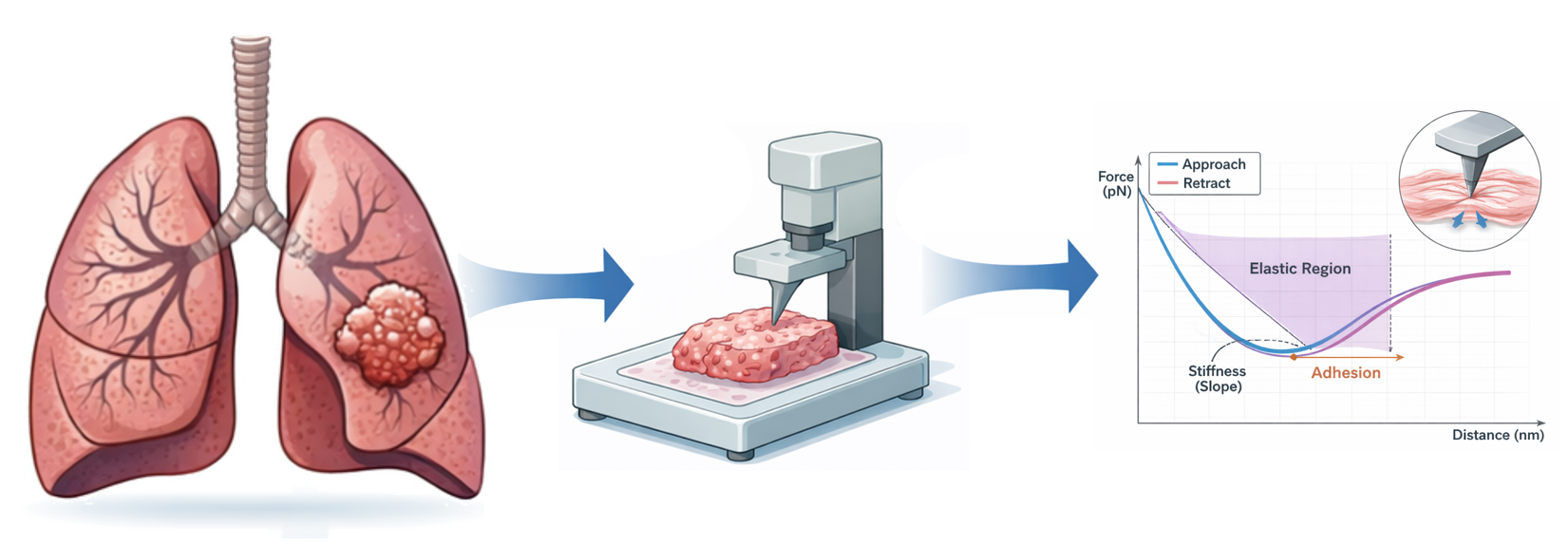
It is well known that each tissue and organ in our body is characterized by a specific deformability or “stiffness”. Thus, our brain or lungs are soft organs, whereas our muscle and bones are stiff. In normal conditions, the stiffness of each tissue is maintained within its physiological range during adulthood. Occasionally, a region of a tissue may temporarily stiffen as part of the normal wound healing response to damage. Likewise, tissue stiffness becomes progressively altered during aging. None of these previously mentioned mechanical alterations compromise neither the integrity nor the normal function of the tissue. In contrast, a hallmark of numerous diseases is the permanent loss of normal tissue stiffness, concomitantly with an impairment of normal functions. In some cases, the tissue becomes globally more stiff as in sclerosis, fibrosis and cancer. In cancer, tissue stiffening has been associated with the excessive abundance of activated TAFs and subsequent deposition of fibrillar collagens. Intriguingly, a fraction of cancer cells may become abnormally soft and hyperflexible, eliciting a mechanical advantage to promote dissemination. We are particularly interested in how normal tissue stiffness is lost in fibrosis and cancer, how this abnormal tissue hardening contributes to the progression of these devastating diseases or resistance to therapies, and how some cancer cells acquire an hyperflexible phenotype to enhance their dissemination. Moreover, we are interested in using tissue mechanics-associated features as novel diagnostic and/or prognostic biomarkers. To pursue these interests, we use advanced models based on biomaterials with tunable elasticity and microfluidics as well as Atomic force microscopy (AFM) and other nanomechanical tools that enable measuring cell and tissue mechanics with high resolution.
Understanding how the collagenous ECM contributes to tumor progression and formation of brain metastasis
We previously reported that the high deposition of fibrillar collagens is associated with poor prognosis independently of the TNM staging in NSCLC. However, how the collagen-rich ECM contributes to tumor progression remains poorly understood. We are interested in understanding how the collagenous stroma promotes immunosuppression and the acquisition of an invasive phenotype, both in the context of the primary tumor and brain metastasis, which is a common metastatic organ in NSCLC.
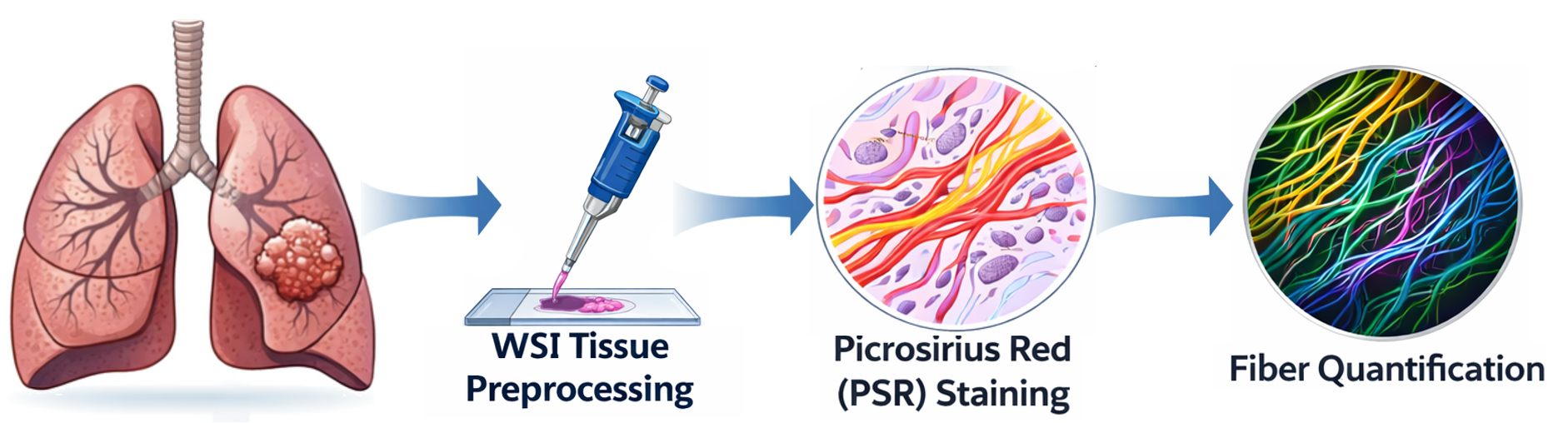
Experimental approaches and areas of expertise
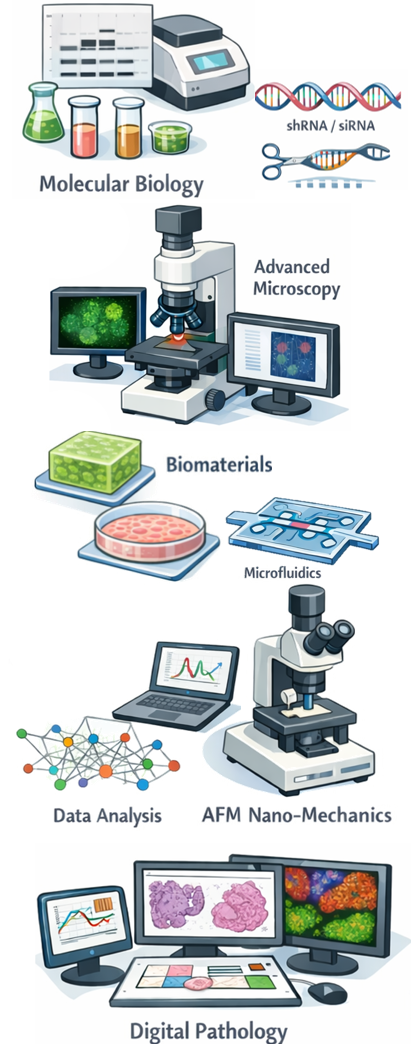
We integrate molecular and cell biology, biomaterials, biomechanics, imaging, and computational analysis to study tumor–stroma interactions in lung cancer and related pathologies.
Cells (human and rodent) are obtained from primary cultures and commercial cell lines. We also developed an ex-vivo assay using precision-cut thin slices of fresh tumors from surgical lung cancer patients to test patient response to selected drugs.
Cell & Molecular Biology
- Primary fibroblast culture; epithelial/mesenchymal cell lines
- Gene perturbation: shRNA, siRNA
- qRT-PCR, Western blot, ELISA
- Immunofluorescence; immunohistochemistry
- Flow cytometry; zymography
Biomechanics & Biomaterials
- 2D/3D matrices with tunable stiffness
- AFM nanomechanics; nano-/microrheology
- Microfluidics for gradients, confinement, and flow-like conditions
- Micropatterning to control cell geometry and mechanical boundary conditions
Imaging & Digital Pathology
- Confocal & reflection microscopy
- Polarized collagen imaging
- ImageJ, QuPath, MATLAB, CT-FIRE
Computational & Theoretical
- TCGA & scRNAseq datasets
- Pathway enrichment; interactome analysis
- Soft condensed matter mechanics