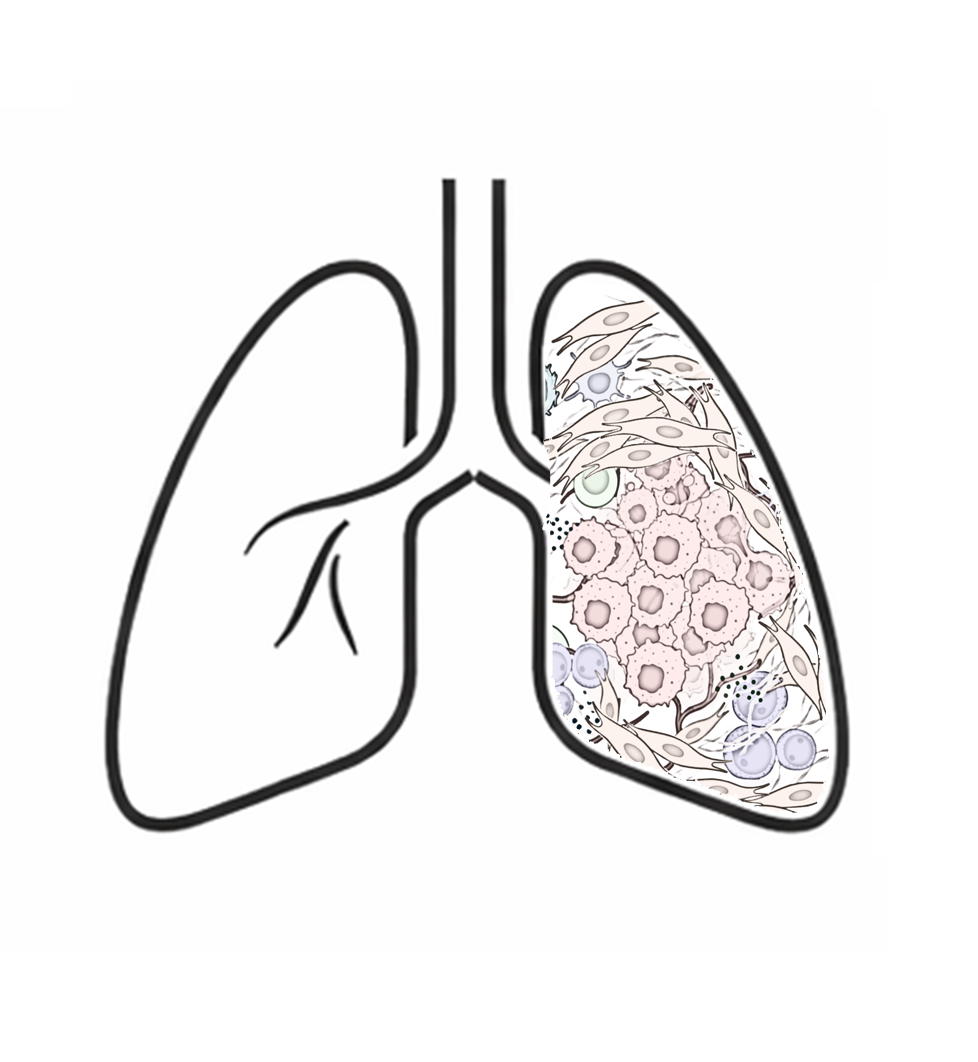
Research interests overview
The stroma is the connective tissue rich in fibroblasts and a collagenous extracellular matrix (ECM) that surrounds epithelial cells and provides key biomechanical and biochemical cues to guide normal development, repair and tissue-specific functions. Conversely, stromal composition and associated signaling becomes chronically awry in prevalent and fatal diseases like cancer and organ fibrosis. In the context of the lung, a hallmark of both lung cancer and pulmonary fibrosis is a persistent desmoplastic stroma rich in activated fibroblasts/myofibroblasts in the background of an excessive deposition of fibrillar collagens, which has been implicated in virtually all steps of disease progression and resistance to therapies.
Our lab aims to understand the origins of the pathologic fibrotic stroma both in the context of the primary tumor and brain metastasis, how it contributes to disease progression, how can it be targeted therapeutically, and how can it be used to identify clinically-relevant biomarkers. For this purpose, we combine cutting-edge preclinical models (in culture, in vivo and ex-vivo) based on patient-derived samples (including primary fibroblasts and tissue samples from patients with lung cancer or idiopathic pulmonary fibrosis), state-of-the-art molecular and cell biology techniques (including “omics”), and bioengineering approaches (mainly atomic force microscopy, microfluidics and digital pathology). We then apply these tools to study quantitatively the aberrant interactions between fibroblasts and other stromal cells (immune cells, endothelial cells) or epithelial cells as well as the aberrant collagenous ECM and associated mechanobiology.
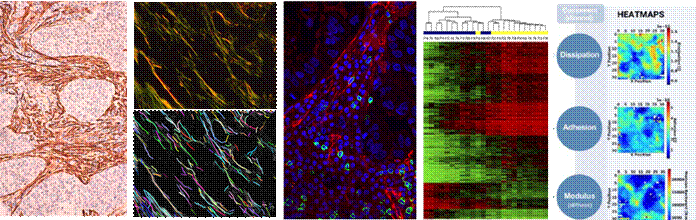
Our ultimate goal is to be translational and bring our knowledge to clinical settings, and to this aim we have ongoing collaborations with clinical groups and collaborate with companies to check the suitability of novel drugs against the aberrant stroma as well as novel biomarker for improve diagnosis, prognosis and therapeutic guidance.